Introduction: The Ever-Changing World of Entertainment
Entertainment has always been a reflection of society, capturing our joys, fears, imagination, and curiosity. But in today’s fast-moving digital age, entertainment is no longer confined to cinema screens, radio waves, or printed pages. It has expanded into an interactive, immersive, and boundary-breaking universe. From virtual concerts and interactive storytelling to AI-powered creativity and global fandom communities, modern entertainment is undergoing a dramatic transformation. This shift is not just changing what we consume, but how we experience it. In this blog, we will explore the remarkable evolution of entertainment and the emerging trends shaping our cultural landscape.
The Rise of Multiplatform Storytelling
One of the most significant changes in entertainment is the emergence of multiplatform storytelling. No longer tied to a single medium, stories today spread across movies, series, games, novels, and even social media narratives. This trend has given birth to a new form of storytelling where audiences can dive deeper into a fictional universe by exploring different formats.
Whether it’s a fantasy series extended through graphic novels or a movie world expanded with video game spin-offs, multiplatform storytelling allows fans to stay engaged longer and form stronger emotional attachments. This trend has also opened doors for creators to experiment and innovate without being limited to one storytelling style. As a result, entertainment content has become richer, more layered, and more immersive than ever before.
Streaming Services: The New Theatres of the World
The explosive rise of streaming platforms has revolutionized the way we consume entertainment. Cinema once held the spotlight as the prime medium for visual storytelling, but streaming has become a global powerhouse. Its success can be attributed to convenience, personalization, and an endless library of content.
This shift has also opened opportunities for diverse voices and new creators. Independent filmmakers, international storytellers, and unconventional genres now have space to thrive. In addition, binge-watching has become a cultural habit, shaping how content is written, produced, and consumed.
But perhaps the most fascinating aspect is how streaming services have broken geographical barriers. A show made in one corner of the world can become a global sensation overnight. This cross-cultural content exchange is enriching entertainment and fostering global understanding.
The New Age of Music: From Stages to Digital Spaces
Music entertainment has undergone a digital rebirth. While live concerts remain unmatched in energy, digital platforms have introduced new ways of experiencing music. Virtual concerts, interactive performances, and AI-enhanced compositions are redefining what a musical experience can be.
Artists today have the power to reach millions without traditional record label constraints. Social platforms help unknown musicians gain global attention, empowering creativity on an unprecedented scale. Moreover, fans now participate more actively in music discovery and production, influencing trends and shaping an artist’s journey.
This democratization of music has led to global collaborations, genre blending, and new creative possibilities. The music entertainment industry is more vibrant, diverse, and accessible than ever.
Gaming as a Cultural Giant
What was once considered a niche hobby has grown into one of the biggest entertainment sectors in the world. Modern gaming is a powerful cultural force, influencing everything from fashion and movies to education and social interaction. Today’s games are not just about competition or recreation—they’re expansive worlds filled with storytelling, innovation, and artistic expression.
Gamers now attend virtual events, participate in global tournaments, and build communities that transcend borders. Meanwhile, games with open-world designs and narrative choices allow players to shape the story themselves, blurring the lines between creator and audience.
Beyond entertainment, gaming technology is being used in healthcare, architecture, military training, and education. It is a testament to how far gaming has evolved from simple pixelated screens to complex, immersive universes.
The Influence of Fandom Communities
In today’s entertainment landscape, fans play a vital role in shaping trends, promoting content, and even revitalizing franchises. Fandom communities are no longer passive observers—they are active participants in the creative ecosystem. They create artwork, write stories, make edits, discuss theories, and influence the direction of major entertainment projects.
Fan-driven campaigns have even saved cancelled shows and inspired sequels. Producers and studios now listen closely to fan communities, recognizing their power to elevate or challenge a project’s success. This co-creation culture is giving entertainment a new dimension where creators and audiences collaborate implicitly.
Short-Form Content: Entertainment in Bite-Sized Pieces
In the age of short attention spans, short-form entertainment has exploded in popularity. Platforms dedicated to quick videos, short stories, and mini-vlogs have created an entirely new entertainment category. While these pieces are brief, they pack creativity, humor, and innovation.
Short-form content has also become a powerful platform for new talent. Many creators who started with simple clips have grown into major influencers, actors, or musicians. This format encourages experimentation and instant feedback, nurturing creativity without heavy production requirements.
Additionally, short-form content has become a cultural snapshot, reflecting current issues, humor trends, and societal moods in real time. It is fast, engaging, and constantly evolving.
The Era of Virtual and Augmented Reality
Virtual reality (VR) and augmented reality (AR) are taking entertainment into unexplored realms. These immersive technologies allow users to step inside fictional worlds, interact with characters, and experience stories from a first-person perspective.
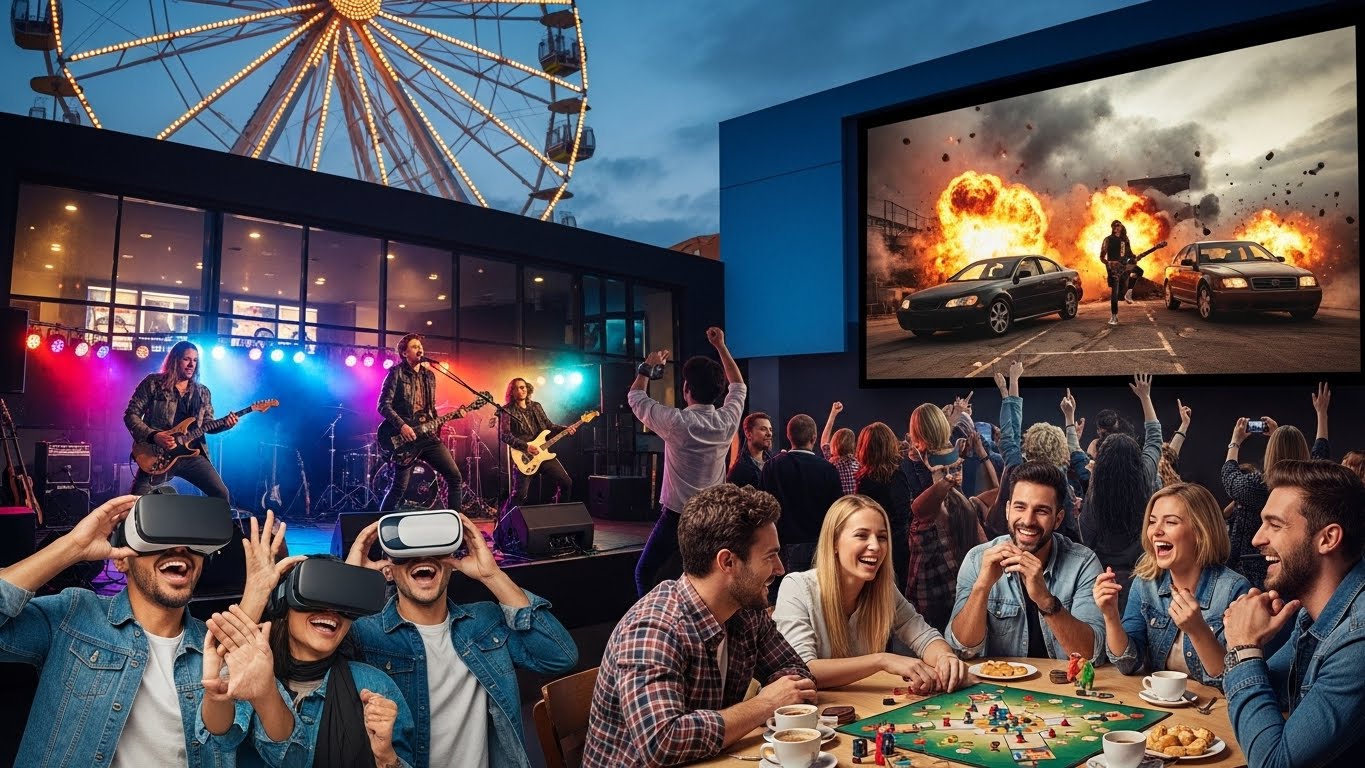
VR concerts, VR games, and virtual social hangouts are becoming increasingly common. Meanwhile, AR enhances real-world environments with digital elements, creating interactive entertainment experiences. These innovations are transforming not just gaming, but education, tourism, fitness, and social interaction.
As technology becomes more accessible, VR and AR are expected to dominate future entertainment trends, offering limitless creative possibilities.
The Impact of Artificial Intelligence on Creativity
Artificial intelligence is reshaping entertainment in profound ways. From generating music and artwork to assisting in scriptwriting and editing, AI is becoming a powerful creative partner. It allows creators to explore new ideas, experiment more efficiently, and push artistic boundaries.
AI-powered characters, virtual influencers, and automated visual effects are becoming increasingly common. While AI does not replace human creativity, it enhances it by handling repetitive tasks and providing fresh perspectives. The combination of human imagination and AI capability is ushering in a new era of hybrid creativity.
Cultural Diversity: A New Priority in Entertainment
One of the most positive developments in modern entertainment is the increasing focus on cultural diversity. Audiences worldwide are demanding authentic representation, inclusive storytelling, and narratives that reflect the richness of global cultures.
This shift has encouraged creators to explore new settings, characters, and themes. It has also helped marginalized voices gain visibility and contribute to the global entertainment dialogue. As a result, the industry is becoming more meaningful, empathetic, and reflective of the real world.
Audience Power: How Viewers Are Shaping the Industry
Audiences today have more power than ever before. Through reviews, social trends, fan campaigns, and community discussions, viewers significantly influence what gets produced, renewed, or cancelled. Creators are listening to audience feedback more closely, leading to better content and more engaging experiences.
This interactive relationship has transformed entertainment from a one-way delivery system into a dynamic conversation. Audiences are not just viewers—they are collaborators and tastemakers.
Conclusion: The Future of Entertainment Is Limitless
The world of entertainment is evolving faster than ever, fueled by technology, creativity, and global connectivity. What once seemed impossible—interactive stories, virtual concerts, AI-generated art, global streaming—has become a part of everyday life. As new innovations continue to emerge, entertainment will only grow more immersive, diverse, and experiential.
The future of entertainment is not just about watching or listening—it’s about participating, connecting, and creating. We are entering an era where the boundaries between artist and audience blur, and imagination becomes the foundation of every experience. Without a doubt, the next chapter of entertainment will be its most exciting yet.